
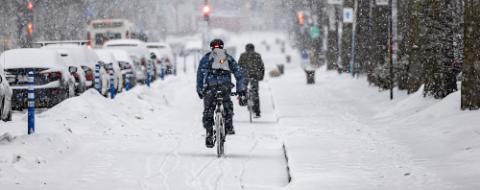
Get your bike ready for winter: tips for safe cycling
Cold temperatures, wet roads and shorter days all pose a challenge when cycling in winter, but the winter weather doesn’t have to mean leaving your bike in the shed. Keeping your bike well-maintained and adjusting your cycling style can keep you safe on the road even during the darker months. Steve D’Hulster from the Flemish Foundation for Traffic Studies (VSV) and Gert Verhoeven from VAB share their top tips.
Start with thorough maintenance
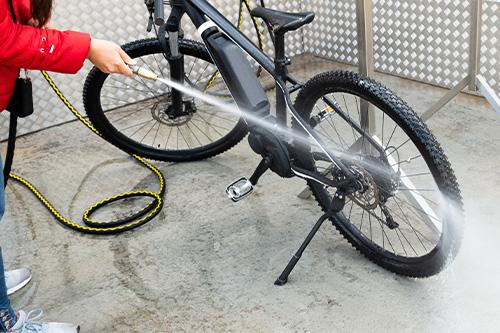
Rain, mud and road salt put additional strain on your bike during the winter months, which is why proper preparation starts with maintenance. Check the tyres, brakes and lights before the temperatures drop. ‘It’s important to start by giving your bike a good clean and making sure everything works smoothly,’ says Gert Verhoeven of VAB. ‘Protect the chain with a suitable chain spray. That will prevent sand, water and salt from damaging the mechanism.
’Regular maintenance remains essential even during the winter. Rinse off road salt and dirt with lukewarm water on a regular basis. Pay particular attention to the chain, sprockets and drive belt. While a belt drive is easy to maintain, maintenance is still necessary. You should also check your tyre pressure. ‘The cold can cause it to drop,’ explains Verhoeven. ‘Correct tyre pressure helps you cycle comfortably and efficiently. In snowy or icy conditions, a slightly lower pressure than usual can provide extra grip.’
Make sure you can clearly see and be seen
In winter, many people cycle in the dark during the morning and evening rush hours. That means good bike lights are essential. Check not only that the lights are working, but also that they are correctly adjusted. ‘More and more bike lights are extremely powerful. That’s good news for cyclists, but less so for oncoming traffic if the lights are incorrectly positioned,’ warns Verhoeven.
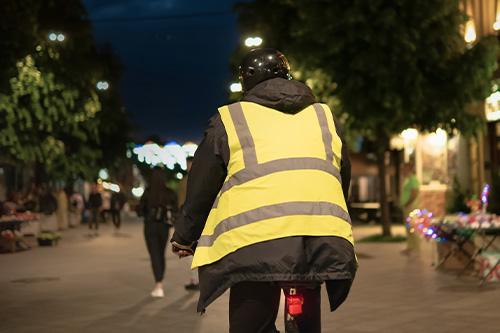
You should therefore aim the headlight so that you sufficiently illuminate the road without dazzling other road users. You should also ensure your lights are kept clean, as rain and dirt can distort the beam. A high-viz vest or reflective clothing further increases your visibility, and you should wear a cycling helmet. Slippery conditions increase the risk of a fall, making head protection particularly important.
Adjust your cycling style
Even a well-maintained bike isn’t guaranteed to grip safely when there’s snow or ice. That’s why your cycling style is at least as important as your equipment. ‘In winter, a safe cycling style has a greater impact on your safety as a cyclist than specialised tyres,’ emphasises the VSV.
Steve D’Hulster advises cyclists to choose their route carefully in winter weather. Main roads are often easier to cycle on than smaller back roads. A slight detour can therefore be a sensible choice. If the cycle path is too dangerous due to snow or ice, the VSV states that you may use the road itself. You should always consider the specific traffic situation carefully.
Reduce your speed, keep both hands on the handlebars and look well ahead. Brake gradually using both brakes and slow down before entering a bend. Avoid sudden turns, acceleration and braking, and watch out for tram tracks, drain grates, manhole covers, and road markings. These can become particularly slippery in frosty conditions. Lower your saddle slightly so that you can reach the ground with both feet, and let a little air out of your tyres for better grip. The wider your tyres and the deeper the tread, the more grip you’ll have.
Stay safe on the road in winter
E-bike cyclists also need to take the conditions into account during winter. A cold battery performs less efficiently, which can reduce your cycling range. ‘Take the battery indoors to charge it at room temperature so that it’s not out in the cold for too long,’ advises Verhoeven. For some bikes, a suitably insulated protective cover can help. In addition, when the road is slippery, adjust pedal-assistance to a lower setting. Set off slowly and use a higher gear to prevent your rear wheel from spinning.
It’s a good idea for anyone who continues to cycle in winter to plan ahead. Check the weather, choose a safe route and have your bike serviced regularly. If there’s snow and ice, it’s sometimes wiser to leave your bike at home for a while.
If you pay sufficient attention to maintenance, visibility and your cycling style, taking the bike remains a practical choice even in the colder months. For anyone cycling to work, these small precautions make a big difference.
Written by Wielerverhaal.be