
From criminology to cybersecurity
Few criminologists would consider a career in banking, but not Ashley Schots. After graduating, she ended up following a career path at KBC that took her into the world of cybersecurity. Here’s her story.
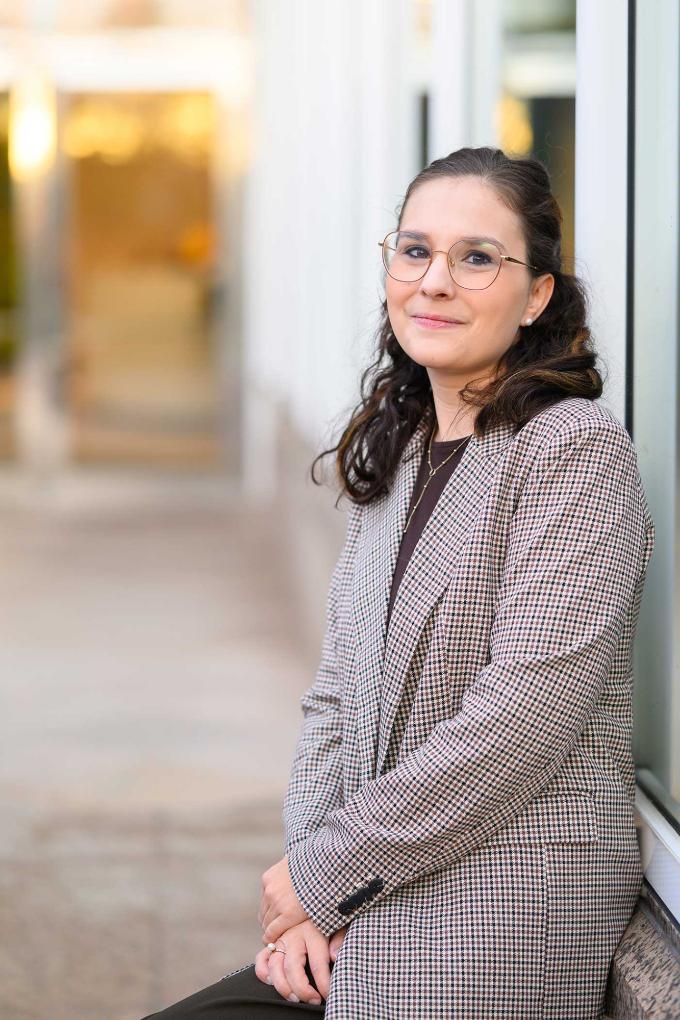
How did you end up at KBC after graduating as a criminologist, Ashley?
After studying, I started working at KBC in an advisory role as Information Security Officer. When new projects were created, I helped the project teams consider the risks, how best to go about implementing security features and how to expose vulnerabilities. That’s how I learnt the basics of cybersecurity.
What makes cybersecurity so fascinating?
Everything moves so quickly in cybersecurity that you come across something new every day. I should also add that it’s a broader domain than you might think. Besides the highly technical part, such as protecting our infrastructure from cyber attacks and intervening when incidents happen, other aspects come into play such as risk management in general and the legal aspect. Another part of my current job is to help develop policy.
What does your current job entail?
Since 2022, I’ve been leading the Offensive Security Team as scrum master. Our team proactively tests for vulnerabilities in our systems, processes, human behaviour and infrastructure.This allows us to stay one step ahead of hackers.
My team mainly consists of technical experts, including ethical hackers and process managers, who have a supporting role in developing solutions.
Our joint efforts have a big impact on KBC as an organisation. On the one hand, we prevent cyber attacks and, on the other, we help teams improve their way of thinking and how they flesh out processes.
Is cybersecurity a male-dominated field?
You need a technical background for most jobs in cybersecurity. And it just so happens that there are more men with a degree in IT than women. However, the balance is shifting more and more towards more women working in cybersecurity, as well as in IT in general. The three women on my team are just as motivated as their male colleagues to use their technical skills in doing this job. Anyone with this mindset who is interested in cybersecurity will be in their element here.
‘Women in tech’ is a theme that’s very much alive at KBC. For example, there’s ‘womentoring’, where experienced colleagues mentor women within KBC for several months. You can volunteer to be a mentor or a mentee – indeed when I first started out, I was a mentee. There’s also the ‘woman walks’ initiative, which is an informal way for women to get to know each other and exchange experiences. It’s a great way to expand your network within KBC.
I’ve always been surrounded by a good bunch of people who I could turn to for advice or a chat. This might seem like a given, but experience shows that these initiatives really add value and can give you the right push at the right time.

Do you have any tips for women starting a career in tech?
Don’t be afraid to go for it. Don’t wait until you think you can do everything the job requires. You’ll have time to develop your skills and, with the right support, be able to learn an amazing amount on the job. At KBC, there’s always someone to help you find your way around the organisation. Look for someone who can guide you through job-related matters, someone who boosts your self-confidence.
Be curious. Consider it an advantage that cybersecurity – and technology in general – develops quickly. From time to time, ask yourself how you can use your strengths to your advantage and how you can work on your weaker points. Regular self-reflection certainly helps in this regard.
Are you happy with your career choice?
Definitely! The link with my studies is criminal behaviour. As a criminologist, you’re taught to understand the underlying human element. What I do now is much more technical, but at the same time, there’s a distinctly human aspect to my current job as a manager. In that regard, I’ve already grown a lot. Expanding my coaching and mentoring skills is something that really appeals to me.
In the future, I might progress to a role in strategy or policy that doesn’t necessarily have to do with cybersecurity. KBC is a job market in its own right. Almost any career move is possible here if you have a clear goal and the right mindset. If you have a specific job in mind, you’ll get the room you need to work towards it. That’s something I know from first-hand experience.