Europe on a knife edge
Mario Draghi produced a weighty report last year on the structural problems within the European economy. Those problems are not just geo-economic, but are more than ever geopolitical and even geostrategic. The world as we know it is in flux, with forces seeking to permanently redraw our worldview. According to Professor David Criekemans, it is therefore time for a dose of hyperrealism from a geopolitical perspective.
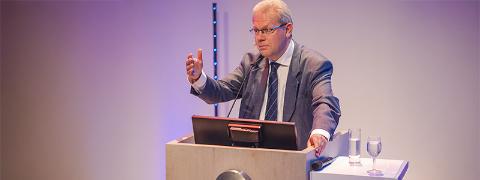
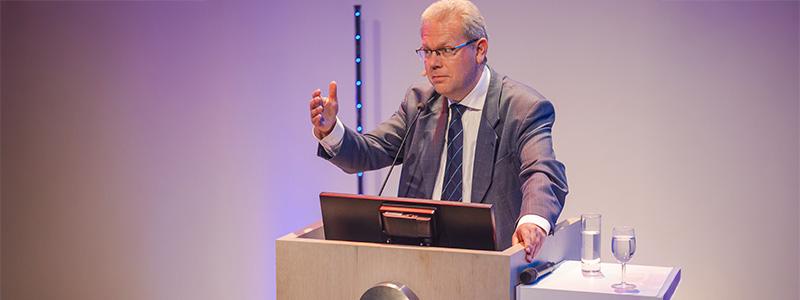
A little while ago, we invited Professor of International Politics David Criekemans (UAntwerp) to deliver a lecture, framed around his new book on the state of our world, and especially Europe's position in it.
Anyone studying geopolitics today sees striking parallels with the late 19th century: demographic shifts, technological revolutions and a redistribution of spheres of influence. According to Prof. Criekemans, we are once again at the dawn of an era in which superpowers are challenging each other and Europe risks being 'sandwiched' between the United States and China.
‘It is a crisis in the traditional power relations’, Criekemans argues. It’s not just the traditional superpowers, but also emerging players that are worried about their position in tomorrow's world. This uncertainty is felt particularly keenly in Europe, which is facing fundamental challenges after something of a golden age. This calls for a new strategy. Professor Criekemans points out that we all have a collective responsibility here: academics, policymakers, but equally the banking sector and businesses that are navigating these complex geopolitical and geo-economic changes and need to make thoughtful choices.
Europe at the crossroads: competition and strategy
.jpg/_jcr_content/renditions/cq5dam.web.960.9999.jpeg.cdn.res/last-modified/1766147549786/cq5dam.web.960.9999.jpeg)
Europe suffers from structural weaknesses; in the Draghi Report (compiled by Mario Draghi, former ECB president and a former prime minister of Italy, banker and academic) specifically warns about overregulation and underinvestment. Summing up the report, the French president said, ‘If we continue like this, we will squeeze ourselves out of the market and even undermine our sovereignty.’ Asymmetric trade relations with the US illustrate this weakness: America is thriving, Europe is lagging behind. So, we have a problem with our competitiveness.
According to Prof.. Criekemans, our second problem is geostrategic, as the invasion of Ukraine is more than just a conflict over territory. Rather, it is the result of an identity crisis that has gripped Russia for decades. After the collapse of the Soviet Union and the failed reforms to adopt the Western model, Russia is seeking to change the world system and literally redraw the world map.
At the same time, China is investing massively in technology to offset its own demographic challenges (rapidly declining birth rates). Both countries are looking for ways to strengthen their position in today’s rapidly changing world.
In his analysis, Professor Criekemans identifies four foundations/pillars on which Europe's prosperity and security have been built in recent decades and which are now under pressure.
1. Energy: from advantage to Achilles' heel
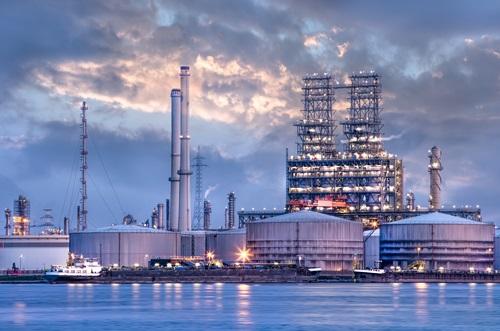
Cheap energy was a pillar of European prosperity for many years. Dependence on Russian gas and oil has become problematic due to the war and sanctions. Energy is now three to four times more expensive in Europe than in the US, and new regulations will further widen this gap. This has direct implications for the competitiveness of European businesses, especially in energy-intensive sectors such as chemicals. That is quite worrying for the Port of Antwerp, which has one of the largest chemical clusters in the world.
2. Asian markets: the game of technology transfer
The model of cheap labour and technology transfer with China is under pressure. Where Europe once benefited from the Chinese market, we are now flooded with their products, such as electric cars and solar panels. Europe therefore needs to revise its policy and dare to demand that foreign companies share their technology, just as China did for years.
But trade tensions between the US and China are also growing. If the Chinese restrict commodity exports, Europe risks having to take sides, with all the consequences that will bring.
3. Peace and security: the new reality
The absence of war in Europe was taken for granted for a long time. That too is now history, and we are in the midst of a systemic crisis. Russia may well come to the conclusion that a limited conflict in Europe is not only possible, but will ultimately yield results. In reality, Putin dreams of a return to the geostrategic situation of mid-1992, in other words Central European countries that are neutral, even though they have since joined NATO.
According to Professor Criekemans, this new context will change Europe’s economic fabric; investment is needed, not only in the hard security and defence sector, but especially in 'resilience'. That means protecting Europe’s energy networks, infrastructure and society from new threats such as cyber attacks and hybrid conflicts. We urgently need to change the familiar paradigm, because this situation is not going to go away. At the same time, however, this crisis also offers opportunities.
4. US security guarantee: a crumbling shield
The US security guarantee, once a certainty, is no longer a given. The US has other priorities, requiring Europe to review its own defence capabilities and its economic structure. ‘You are only taken seriously in world politics if you have something to offer,’ Criekemans argues. Europe needs to invest in technology, innovation and defence if it wants to become relevant again.
Hyperrealism as compass, diversification as strategy
Europe must broaden its outlook and forge new relationships with countries such as India, Vietnam, Thailand, Indonesia and Latin America. Africa also offers huge opportunities, given its demographic growth. ‘Now is the time, and I mean this in a good way, to return to Africa. China invests in the elite and brings its own workers over; Russia opts for a paramilitary model, but in reality plunders the Sahel nations. Europe can offer an alternative, but that will be a long-term investment, and that is precisely where the spending cuts are falling. Europe must become the best connected country in the world.’
Instead of embracing protectionism, like the US, Europe should instead focus on openness and attracting talent. ‘Perhaps we need a programme for displaced talent. Let talent from the US come to Europe, for example,’ Criekemans suggests.
There are a number of crucial variables that need to fall into place to make Europe relevant again.
In terms of energy, the US is opting for a scattergun strategy, investing in everything. The second variable is deregulation, and number three is data centres, which in turn are linked to energy. By harnessing huge data capacity, like China they believe they can revolutionise other domains: from new materials (and patents on them) to climate mitigation, energy transition, and more besides.
China remains relevant, but we need to change our rules to deal with them intelligently, for example through technology transfer. But even more important for Europe are the intermediate powers such as India, Brazil and especially Africa.
A clear paradigm shift is taking place towards a more competitive, realistic world, with 'security' as the new variable. In the coming years, we will be hearing more and more about the concept of 'strategic autonomy'. ‘Europe is experiencing a 'crisis of imagination'; we thought the world of the past 30 years would last forever, while geopolitical factors such as demographics, economics, technology, and so on, were already changing below the waterline. I therefore advocate a sense of hyperrealism. The Brandenburg Gate on the cover of my book is not there by accident; but instead of the Cold War, it refers to Germany itself, because when Germany changes, Europe changes.’
Chancellor Friederich Merz's statement on the evening of his election victory was very significant: ‘Meine Damen und Herren, I believe that the US, at least the current administration, is no longer interested in the fate of Europe, and I believe that the crisis caused by the Russians in Ukraine gives us Europeans only a limited window of time to put our houses in order.’ Hyperrealism has also reached Germany, according to Criekemans.
Investing in innovation and resilience
But every crisis also offers opportunities. Europe must adapt its strategies, invest in innovation and resilience, and so restore its position in global politics. The future for Europe lies in exploiting its own potential, forging new partnerships and investing in technology and defence.
‘We have the potential to do that, but we need to change our strategies and mobilise capital for innovation. Resilience and defence are becoming the new growth opportunities of the future. Hopefully, by embracing those opportunities, Europe can reposition itself in a changing world.’
‘Hyperrealisme. Europa in een nieuw geopolitiek tijdperk’ - professor David Criekemans - Uitgeverij Acco.
Disclaimer:
Tenzij uitdrukkelijk anders bepaald, heeft alle informatie die u hier raadpleegt of verkrijgt een vrijblijvende en zuiver informatieve waarde. Ze wordt naar best vermogen en op regelmatige tijdstippen bijgewerkt. KBC Bank NV geeft echter geen garanties wat betreft de actualiteit, accuraatheid, correctheid, volledigheid of geschiktheid voor een bepaald doel van deze informatie. De hier verstrekte informatie vormt geen advies of verkoopaanbod van producten of diensten en is niet bestemd voor commercieel gebruik. U blijft zelf volledig aansprakelijk voor de gevolgen van het gebruik dat u van deze informatie maakt. De intellectuele eigendomsrechten op de informatie, publicaties en gegevens die hier verstrekt worden, komen toe aan KBC Bank NV of aan derden en u moet zich onthouden van elke inbreuk hierop. Behoudens de uitdrukkelijk voorafgaande en schriftelijke toestemming van KBC Bank NV is elke overdracht, verkoop, verspreiding of reproductie van deze informatie verboden.