Germany: a challenge for determined entrepreneurs
The German market might have its challenges, but it offers exceptional opportunities for well-prepared Belgian companies. Addressing an audience of entrepreneurs and company managers, the panel discussion at the Germany event conveyed a particularly down-to-earth message: if you respect German formalities, price pressure and administrative complexity, you can build significant value in the long term.
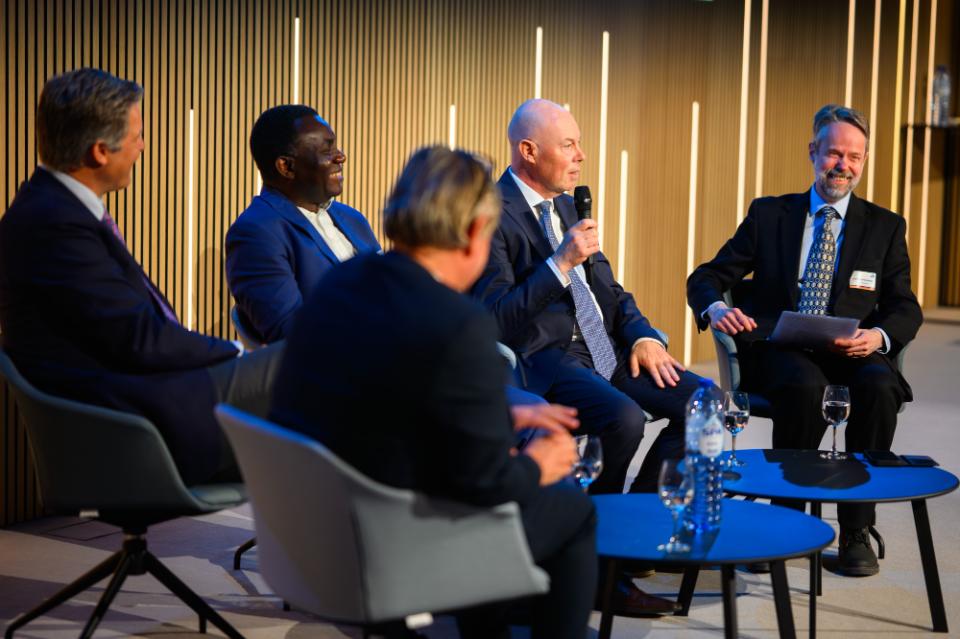
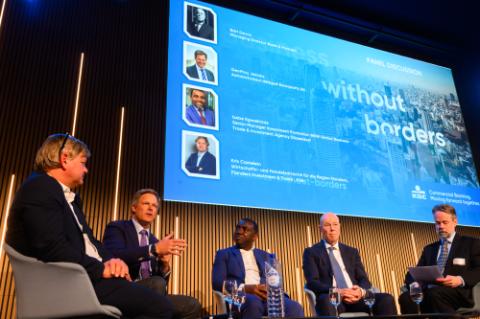
Speakers included Bart Devos, Managing Partner at Boels and Partners, Geoffroy Jacobs, Managing Director of Euroquartz SA, Izebe Egwaikhide, Senior Manager Trade & Investment Agency, Düsseldorf, and Kris Castelein, Economic and Trade Counsellor at Flanders Investment & Trade in Cologne. Stefano Snozzi, General Manager KBC Germany, acted as moderator. Together, they painted a realistic picture of what doing business and investing in Germany really entails today.
Challenging yet attractive
Germany currently offers many acquisition opportunities as numerous companies are performing below their potential, presenting Belgian entrepreneurs with the chance to create value through flexibility, operational efficiency and perseverance.
Bart Devos, Boels and Partners
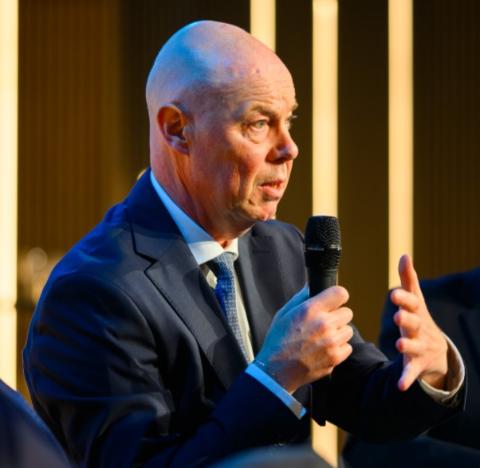
Bart Devos instantly set the tone. He believes that Germany is home to many companies that are failing to perform to their full potential, creating opportunities for investors armed with patience, operational strength and a long-term vision. His ‘Family Office’ has already secured three acquisitions there without compromising on its core values: integrity, respect and loyalty. In essence, he claims that Belgium possesses the perfect combination of flexibility, pragmatism and entrepreneurship that is so relevant in Germany today.
Devos: “Belgian entrepreneurs should focus less on the obstacles and more on the opportunities”. According to his analysis, many German companies have put off digitalisation, internationalisation and organisational change for too long, which he believes creates opportunities for parties capable of streamlining processes, implementing ERP systems, integrating international profiles and steering companies in a new direction.
Formal, slow and culturally different
Germany requires extreme attention to documentation, formality and preparation, but rewards companies that build trust with loyal business relationships.
Geoffroy Jacobs, Euroquartz SA
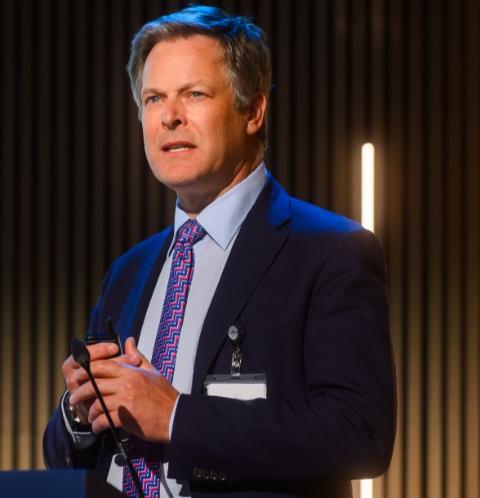
Geoffroy Jacobs presented the most compelling business story. Following the recent acquisition of a German site, he described just how much business culture really differs. “Do not underestimate Germany when it comes to documentation, formality and administrative preparation.” In Germany, everything must be formally documented and carefully presented. If you respect this and plan well, you can certainly make progress.
Opening a simple bank account, having a local address and going through KYC procedures prove to be surprisingly challenging obstacles. He also pointed out that this complexity is not insurmountable. For Jacobs, the exceptional loyalty of German business partners is the real positive surprise. Once you have built up trust, you can count on loyal customers, suppliers and partners, making the market particularly attractive in the long term.
Location, sector and network
Investing in Germany starts with understanding sector clusters, regional strengths, regulations, incentives and choosing the right location.
Izebe Egwaikhide, Trade & Investment Agency
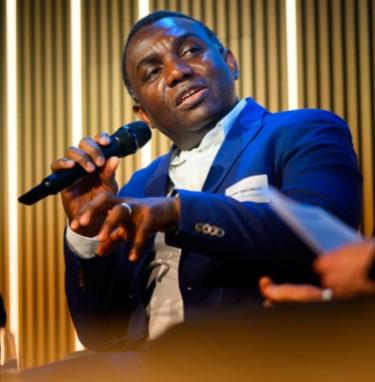
NRW Global Business, FIT took a more structural view of Germany as an investment location. Izebe Egwaikhide stressed the importance for foreign companies of fully understanding how the German industry works: in strong clusters, through intensive collaborations and with distinct regional specialisations. That’s why choosing a location is not a minor detail, but a strategic decision. He believes that companies should decide upfront whether they want to open a branch, make an acquisition or first test the market through a sales office.
Egwaikhide also highlighted the role of regional incentives, innovative ecosystems and research networks. “In North Rhine-Westphalia in particular, there are opportunities in logistics, mobility, data centres, defence, cybersecurity and other innovative sectors.” His main message was that success in Germany depends not only on capital, but on preparation: selecting the right region, finding the right partners, considering energy connections, talent pools and regulations, and starting to plan well in advance.
Building local credibility
Success in Germany requires quality as well as competitive prices, a local presence, knowledge of the language and meticulous preparation.
Kris Castelein, Flanders Investment & Trade
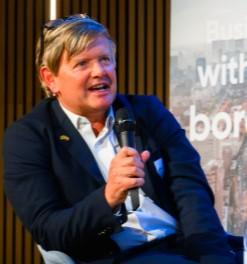
Kris Castelein translated these insights into clear advice for Belgian entrepreneurs. In his view, the German market is both quality-oriented and highly price-sensitive. In other words, a strong product alone is not enough. “Belgian companies need to combine quality with competitive pricing.” He also stressed the importance of having a local presence. German customers and partners want to see that a company is truly committed to their market.
Castelein also warned of the administrative burden and lengthy processes. “Be prepared, speak German as much as possible, set up a German-language website and make use of trade fairs and networking events such as Hannover Messe, Interpack and Anuga.” In his view, the German market cannot be conquered from afar, but requires a visible, accessible and culturally attuned presence.
Key takeaways for company managers
Rather than a sales pitch about Germany, the audience attending this panel discussion was treated to a mature business story. True, the market is bureaucratic, formal and often slow-moving, and the cultural differences are very real – but that is precisely what creates opportunities for companies able to combine discipline with the spirit of enterprise. The panellists were remarkably unanimous: Belgian companies offer something that carries great weight in Germany: pragmatism. With good preparation, respect for the language and culture, a local presence and a strong team, it is possible not only to gain a foothold in Germany, but also to create exceptional value.
Stay updated
This article is the second part of our series on Germany You’ll soon find the third part on our website. Be sure to also check out our news overview with articles on other economic topics.