


The added value of a pension fund for both employees and employers
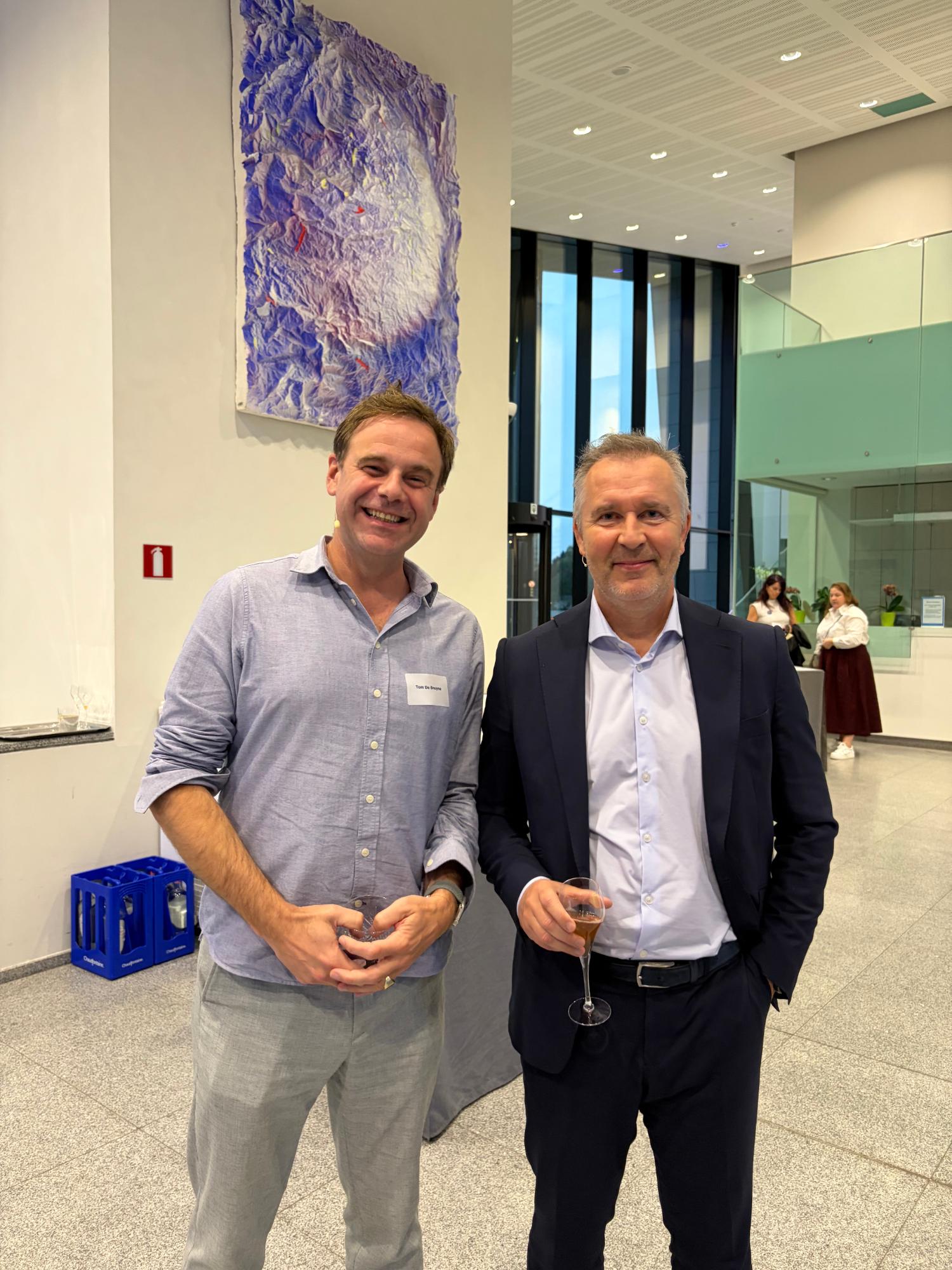
During the KBC Pension Fund Solutions event, Luc Vanbriel highlighted the top trends and opportunities in the world of pension funds. Tom De Bruyne shared his insights on how employers can enhance the perceived value of their remuneration and benefits package.
The key message was that anyone committed to an attractive and sustainable remuneration policy today must recognise that supplementary pension accrual is more than just a fringe benefit.
The growing importance of a supplementary pension
The economic context is putting pressure on the Belgian pension system. Belgium currently has a public debt of more than 109% of GDP. In addition, expenditure on statutory pensions keeps rising, going from 8.7% of GDP in 2005 to 11.3% in 2025. According to the Belgian Federal Planning Bureau, it will continue to rise to 12% by 2070.
That’s why it’s becoming increasingly important for employers and employees to build up a supplementary pension on top of the state retirement pension.
Adding value without affecting payroll cost
At the same time, Belgium remains a frontrunner when it comes to tax on labour. Many employers are therefore wondering how they can increase the value of a remuneration package without a corresponding rise in payroll cost. This is where a supplementary pension can play a significant role. Since the second pension pillar halves the tax burden compared with a traditional salary payment, the same employer contribution results in a greater benefit for the employee.
Pensions as part of a modern remuneration policy
Rather than an isolated concept, pensions are part of a broader Human Capital Solutions package alongside mobility, health, well-being, bonuses and other alternative forms of remuneration. What sets pensions apart is the long-term commitment to employees.
Pensions are therefore increasingly becoming a strategic building block for attracting and retaining talent, and for offering employees financial security.
Why companies are opting for a pension fund
In countries such as the Netherlands, Denmark and Australia, pension funds are already the norm, and they are also gaining popularity in Belgium. The main reasons cited during the event were higher expected returns, affordable cover and comprehensive support for employers.
Additional benefits of a pension fund:
- Favourable Belgian taxation
- Profits stay in the pension fund
- Advantageous cost structure thanks to direct access to reinsurers
- No capital requirements such as those under Solvency II
Returns make the difference in the long term
One of the most notable insights from the presentation was the impact of returns on the final pension accrual. Historically, Belgian pension funds have achieved an annual average return of around 5.6%. Although past returns offer no guarantee of future performance, this does illustrate the potential of long-term investing.
In the sample calculation presented during the event, a pension reserve grows to 80 424 euros after 30 years – 19% higher than the comparable SPA reserve of 67 500 euros. For employees, this means 12 924 euros more in pension capital.
Employers can benefit from a pension fund too
Employees aren’t the only ones to benefit – through buffers and free reserves, a pension fund can also help ensure more stable pension funding for employers. In the model presented during the event, 80% of the investment return is allocated to the employee’s individual account and 20% to the employer’s free reserves. This buffer helps to absorb shocks and limit the impact on the income statement.
The simulation shows that a buffer of 10% along with 20% of the return over a 30-year period can grow into an additional employer budget of 22 904 euros, or roughly five times the original buffer contribution. This buffer can be used to cover the administrative charges, to pay the reinsurance premiums or to cover any shortfall below the minimum legal reserves at the time payments are made.
One question every HR and business manager should ask
Many organisations today invest in payroll, mobility and well-being. Luc Vanbriel’s insights show that pensions deserve at least as much attention – not just because they offer employees better pension prospects, but also because they enable employers to increase value without affecting payroll cost.
So the question is not whether pensions deserve a place in your remuneration policy, but whether your current approach is leveraging all the opportunities a pension fund can offer.
From ‘supplementary pension’ to coveted benefit
Tom De Bruyne used the psychology of money and behavioural sciences to explain how employers can make the value of employee benefits more visible and tangible to employees. Traditional terms like ‘supplementary pension’, ‘capital accrual’ and ‘long-term employability’ mainly appeal to the rational mind, while people generally base their choices on intuition. He therefore argued that, rather than communicating in terms of products or benefits, employers should focus on employees’ underlying dreams, needs and motivations. For example, instead of saying ‘pension pot’, say ‘pension salary’, and instead of ‘pension saving’, call it ‘comfortably living off your investments’. A vitality programme becomes more appealing when you explain that employees need to have enough energy left in the evening to spend time with their family. Similarly, a supplementary pension becomes more tangible when you explain that the employer contributes a little each month towards the day when working becomes a choice rather than a requirement.
Want to find out what a pension fund can mean for your remuneration policy?
Feel free to visit our webpage on pension funds at KBC.
Lees dan de info op onze webpagina over Talk to one of our pensions experts to learn more about the options available to your organisation and your employees.
Disclaimer:
Tenzij uitdrukkelijk anders bepaald, heeft alle informatie die u hier raadpleegt of verkrijgt een vrijblijvende en zuiver informatieve waarde. Ze wordt naar best vermogen en op regelmatige tijdstippen bijgewerkt. KBC Bank NV geeft echter geen garanties wat betreft de actualiteit, accuraatheid, correctheid, volledigheid of geschiktheid voor een bepaald doel van deze informatie. De hier verstrekte informatie vormt geen advies of verkoopaanbod van producten of diensten en is niet bestemd voor commercieel gebruik. U blijft zelf volledig aansprakelijk voor de gevolgen van het gebruik dat u van deze informatie maakt. De intellectuele eigendomsrechten op de informatie, publicaties en gegevens die hier verstrekt worden, komen toe aan KBC Bank NV of aan derden en u moet zich onthouden van elke inbreuk hierop. Behoudens de uitdrukkelijk voorafgaande en schriftelijke toestemming van KBC Bank NV is elke overdracht, verkoop, verspreiding of reproductie van deze informatie verboden.