
Geopolitics puts wind in the sails of Campine’s strategy
‘We have become the world leader and we remain ambitious’
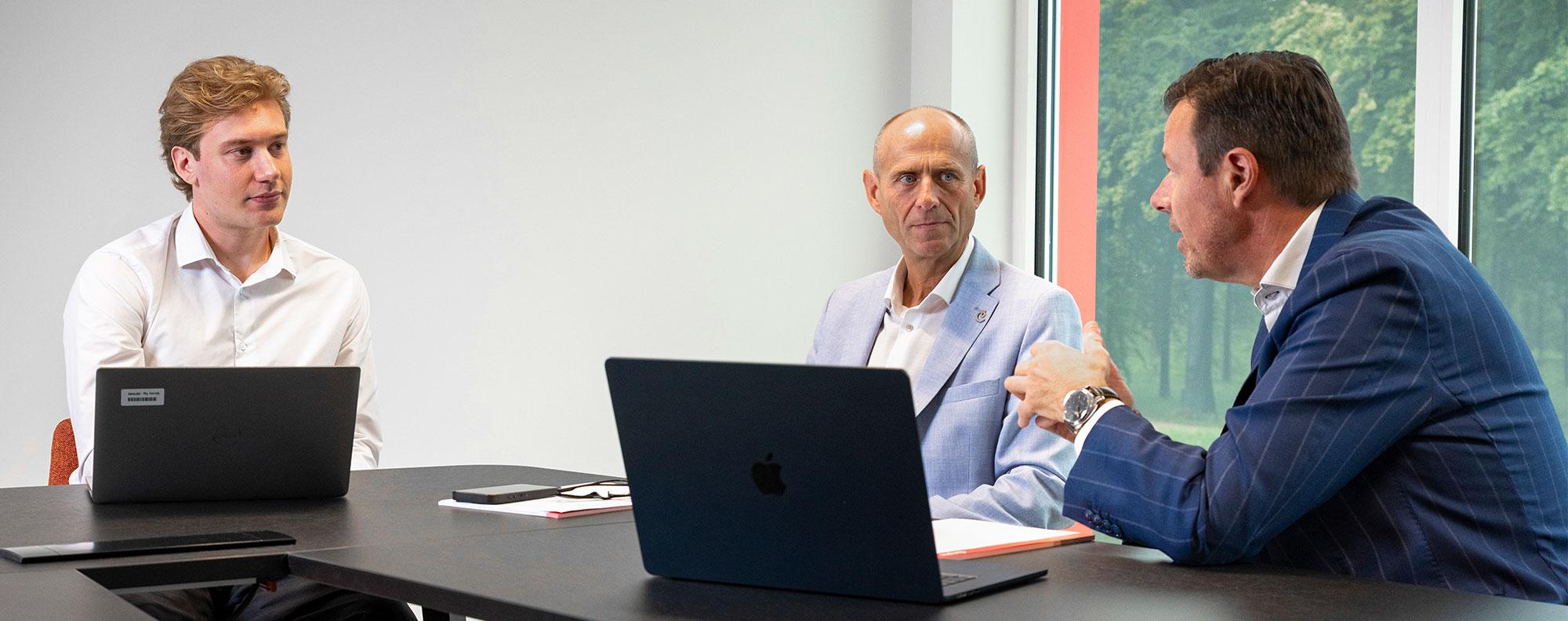
As a result of geopolitical tensions, the EU is seeking to increase its sovereignty, including in relation to raw materials. For Campine, a Beerse-based company specialising in metal recycling and fire retardants, that creates opportunities. The company is investing heavily in recycling and sustainability and is also upscaling through acquisitions. ‘We are growing strongly, but there are also challenges to meet if we want to maintain our position,’ says CEO Wim De Vos.
Campine, part of a listed German family company, operates in two distinct businesses. The Circular Metals division recycles non-ferrous metals and antimony from industrial waste streams. The Specialty Chemicals division produces antimony trioxide, a white powder used as a flame retardant in textiles, insulation and plastics.
Both businesses are the fruit of a long tradition of reinvention. Wim De Vos: ‘Our company has existed for more than 100 years. It used to produce antimony oxide for cathode ray tube TV sets.’ When that market disappeared, Campine switched to flame retardants. A similar change happened in relation to lead oxide. After it was banned as an additive to paint, the company began recycling lead acid batteries in the late 1980s.
Geopolitics reshapes the market
Antimony is now the jewel of this production site. One of the ways it’s obtained is from the recycling of lead acid batteries. ‘Antimony is thought of as a critical raw material for which the supply is heavily dependent on Asia. However, we have developed a technology that allows us to recover it from a variety of industrial waste streams for reuse,’ explains the CEO.
This development, along with the company’s long-standing expertise, has served Campine well in recent years. When China brought in export controls on products containing antimony in September 2024, the whole world had to look for alternatives. ‘As a result of that, we became the world’s leading supplier of antimony trioxide, including to Japan and the United States, for example. Because the US has no production of its own, we were also unaffected by Donald Trump’s trade tariffs.’
Increasing the level of recycling
Campine is a trailblazer when it comes to recycling, which already accounts for 20% of its antimony. The company wants to increase that share to 50%. ‘Raising our level of recycling is the most important step we can take towards sustainability,’ says De Vos. ‘When we receive a 10-kilo battery, we currently sell eight kilos of it back as raw material. We need to increase that gradually to nine kilos. Our impact in the circular economy is many times bigger than what we do in relation to our energy consumption with electric vehicles and solar panels.’
However, Campine still faces obstacles to achieving its ambition. ‘Like a lot of firms, we come up against complex regulations. Importing end-of-life batteries from other European countries requires a variety of permits from national and regional environmental authorities. If we want to replace the linear economy with circularity, our laws and regulations need to be aligned with that.’
A higher level of recycling is the most important step we can take towards sustainability.
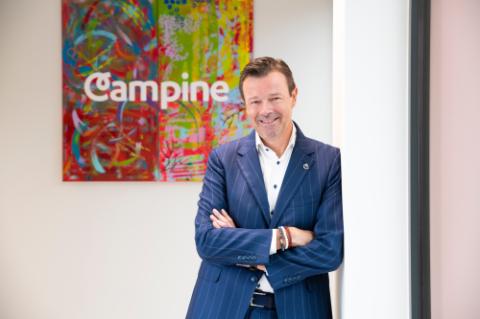
Wim De Vos - CEO Campine
New financing needs
In the meantime, the company isn’t hanging around, having already acquired five battery recycling plants in France. The Belgian and northern French sites are located in close proximity to each other, creating economies of scale and enabling the specialisation of production processes. Campine is also expanding in Specialty Chemicals, with the recent takeover of the Flamaway Group in Zele.
Naturally, this gives rise to new financing needs. And for that, the company relies on KBC Commercial Banking.
Wim De Vos: ‘On the one hand, it’s about investment credit facilities for acquisitions and new technologies. However, the steep rise in antimony prices has also had a direct impact on our working capital. We have therefore set up a factoring system that evolves in line with the outstanding customer invoices, which means that we don’t have to keep renegotiating.’
The KBC network abroad supports Campine with its business relationships in distant locations. ‘When you have to make advance payments for raw materials in Vietnam or Tajikistan, you want to be sure that you will actually receive the goods. The bank checks that such transactions are carried out securely and correctly.’
It’s partly because of this that the company has the financial capacity for further acquisition and growth. ‘Our results in the past few years have been excellent. Our family majority shareholder reinvests a great deal of the profits so that we can further consolidate our position. That means our growth story is far from over,’ concludes De Vos.
Disclaimer:
Unless expressly stated otherwise, all information that you consult or obtain here has a non-binding and purely informative value. It is updated to the best of its ability and at regular intervals. However, KBC Bank NV does not guarantee the topicality, accuracy, correctness, completeness or suitability for a particular purpose of this information. The information provided here does not constitute advice or offer to sell products or services and is not intended for commercial use. You remain fully responsible for the consequences of the use you make of this information. The intellectual property rights to the information, publications and data provided here belong to KBC Bank NV or to third parties and you must refrain from any infringement thereof. Except with the express prior written consent of KBC Bank NV, any transmission, sale, distribution or reproduction of this information is prohibited.