
REMO invests and adapts to climate change
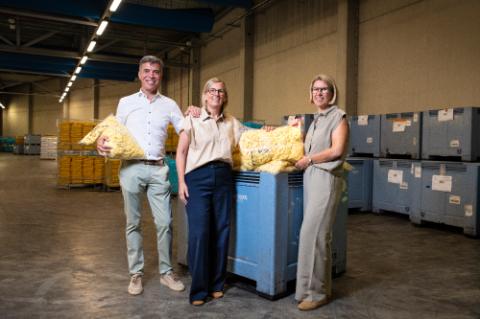
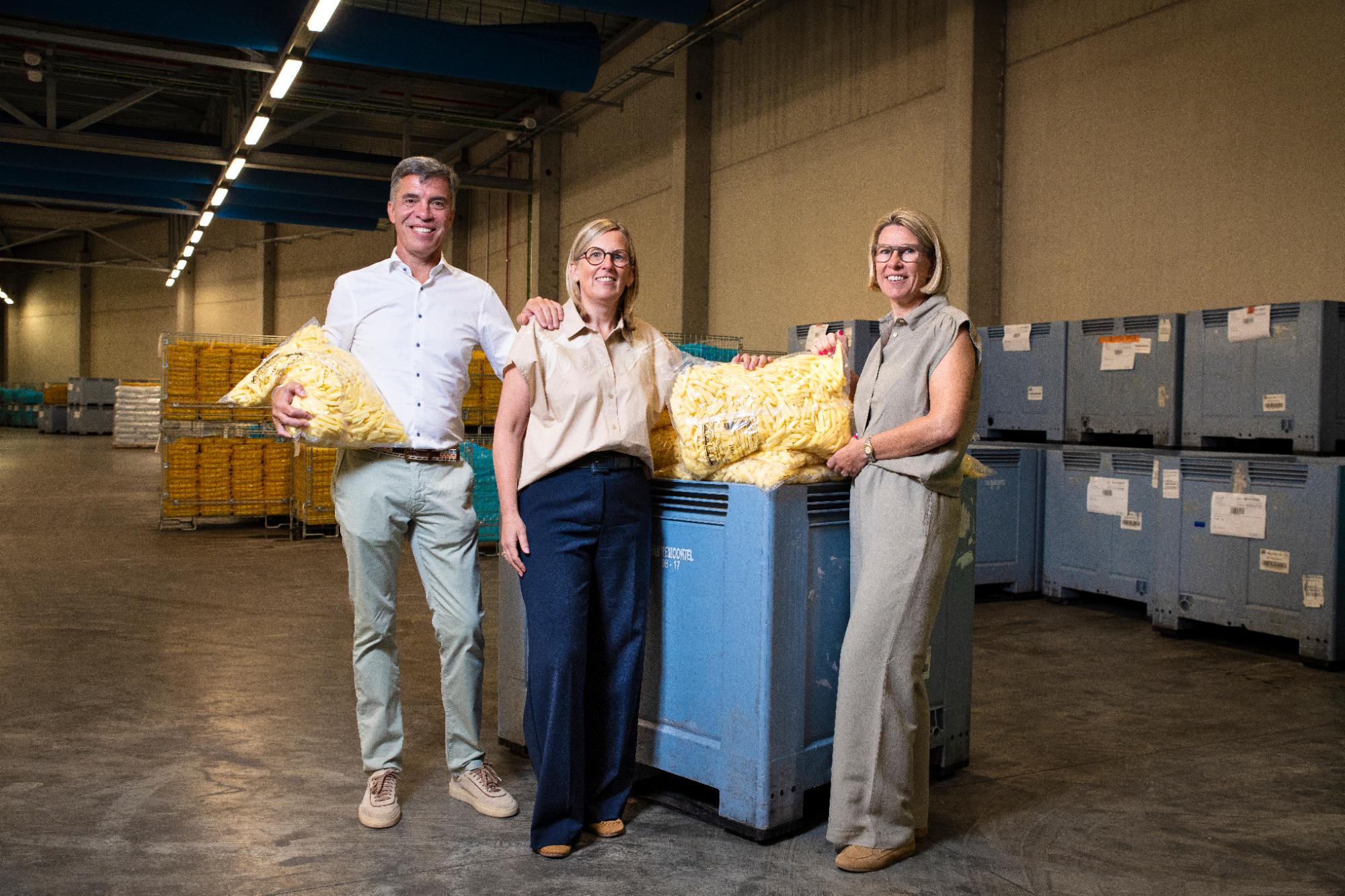
Potatoes remain an important part of our diet. REMO, a family-owned firm from Verrebroek, specialises in making fresh cut chips and potato products for the hospitality industry and institutional kitchens. Almost 40 years after its foundation, the company is investing heavily in innovation, automation and sustainability. ‘Climate change obviously affects the supply of our raw material, but we have a resolute belief in the future,’ says CEO Wim Lannoey.
REMO's history goes back to the 1980s, when Jozef Van Remoortel and Frieda Apers were forced to give up part of their farm for the development of the Port of Antwerp. Rather than continue farming elsewhere, they opted to change course, and in 1989, they began processing potatoes into fresh cut chips. It proved to be a successful switch, as REMO grew to become the market leader in fresh potato products for snack bars, hospitality, institutional kitchens and industrial meal suppliers.
Since then, the second generation has taken the helm: daughters An and Els Van Remoortel and son-in-law Wim Lannoey as CEO. ‘Flanders is famous for frozen chips. We operate in a different segment, however: fresh cut chips, sliced or diced potatoes, baby potatoes and so on, which we supply chilled at 2-4 degrees. As well as raw products, we also offer blanched or pasteurised varieties, which keep for longer and are quicker to prepare, without any loss of flavour,’ explains Lannoey.
We invest to make sure quality remains guaranteed
Wim Lannoey - CEO REMO
The impact of climate change
Around half of the company's production stays in Belgium, while the rest goes to neighbouring countries and the UK. ‘Longer distances aren't possible, because we want to supply freshness and quality. That's why I like to compare what we do to top-level sport. It's about working really hard every day, and we have to move with the changing seasons. Due to the drought, this year's potatoes are going to be smaller than usual, so the chips will end up being shorter too. We can't do anything about that in our factory,’ laughs the CEO.
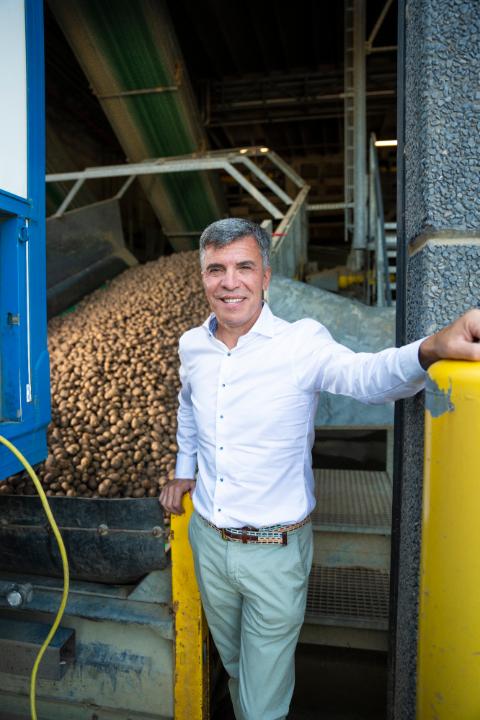
Climate change is a reality to which this industry has to adapt. ‘The yield and the quality of potatoes depend heavily on the weather during the growing months of July and August. Remember how there was suddenly a huge surplus of potatoes in summer 2025? This year we already know that the harvest will be disappointing.’
To spread the risk, REMO works with farmers to select the right potato varieties according to the soil. ‘Our growing areas are within a 120-kilometre radius of the business. Going further afield doesn't make much sense, because the transport costs get too high and it's not really sustainable either,’ says Lannoey. The company itself has been working for years to make all its processes more sustainable: waste is fermented to convert it into energy, water use is tightly controlled and both rainwater and process water are reused.
A banker on your wavelength
The company also stands out for its continuing innovation. Efficient machinery managed by trained operators helps to compensate for natural variations in the raw ingredients. At this very moment, a new production unit for pasteurised potato products is taking shape at Verrebroek. ‘It's a building specially designed for the production line, which we're automating as much as possible. This will enable us to operate more efficiently and increase productivity while making sure quality remains guaranteed.’
The family firm doesn't make such investments lightly. ‘We can't bear the cost of major investments on our own. We need a bank that will listen and support us as we grow,’ says Wim Lannoey. ‘Luckily, KBC Commercial Banking has been our main bank since our earliest years. They've given us support and guidance at various crucial moments. Our relationship manager also put us in touch with Encon for specialist advice, so now we're thinking about solar panels and battery storage.’
Investing in staff
Technology is gradually becoming more important at REMO, but according to the CEO, that doesn't mean that staff will be surplus to requirements. ‘The jobs our people have to do will change. We’re training them and helping them reach a higher level, so that they can grow along with the business.’
That fits in with the family-run nature of the firm. In a region with high employment and a lot of competition for talent, the company tries hard to keep staff loyal, including with a cafeteria plan. ‘As a family firm, we will keep investing, and that includes investing in our staff. We have an unshakeable belief in the future, and we can only build it together with our employees. Our ambition is to make the firm ready for the next generation,’ concludes Lannoey.
Disclaimer:
Unless expressly stated otherwise, all information that you consult or obtain here has a non-binding and purely informative value. It is updated to the best of its ability and at regular intervals. However, KBC Bank NV does not guarantee the topicality, accuracy, correctness, completeness or suitability for a particular purpose of this information. The information provided here does not constitute advice or offer to sell products or services and is not intended for commercial use. You remain fully responsible for the consequences of the use you make of this information. The intellectual property rights to the information, publications and data provided here belong to KBC Bank NV or to third parties and you must refrain from any infringement thereof. Except with the express prior written consent of KBC Bank NV, any transmission, sale, distribution or reproduction of this information is prohibited.