

Energy as a Service: a new business model for the energy transition
Solar and wind energy are the largest sources of new power in large parts of the world. But not everyone has the capital, know-how or space to invest in their own installation. Energy as a Service (EaaS) can make this more accessible. What does this model mean for investors?
Jonas Theyssens, Portfolio Manager at KBC Asset Management, shares his views on the matter.
Energy is back in the spotlight
Energy bills that fluctuate in line with international conflicts, increasing strain on the electricity grid in more and more places, and government incentives encouraging businesses and consumers to adopt more sustainable practices – energy has returned to the spotlight in recent years.
We want more control over our energy costs and less dependence on fossil fuels. But not everyone has the capital, know-how or space to invest in their own installation. Moreover, technology is advancing at breakneck speed, with management becoming increasingly complex, especially for major customers.
Energy as a Service removes a major obstacle: there’s no need to make a substantial investment today to save energy tomorrow.”
Jonas Theyssens, Portfolio Manager at KBC Asset Management
This is where Energy as a Service comes in. “An external party installs the solar panels, batteries and charge points, and takes care of maintenance and monitoring”, says Jonas Theyssens, Portfolio Manager at KBC Asset Management. “You don’t own these items, but pay for their use. This model is also becoming popular with businesses as it allows them to improve the sustainability of their energy supply without having to shoulder the full investment. Large companies sometimes even have their own local power grid installed. Depending on the contract, the external partner takes care of management, technological updates and agreements on performance and availability.”
Case by case
You could compare EaaS to cloud computing: companies used to keep their servers in their own basements, whereas they now rent computing power in the cloud. EaaS essentially does the same with energy. The innovation lies not only in the solar panels or batteries, but particularly in the combination of software, financing, management and service provision. This can lower the investment threshold for the customer and help keep costs more predictable.
Despite its many advantages, EaaS is not the best choice for everyone. The provider recoups the investment through the contract, including a profit margin. These contracts often run for ten to twenty years, and you become dependent on a single partner. “If you have sufficient capital and know-how, you may be better off making the investment yourself,” Jonas adds. “This needs to be assessed case by case. Still, this service makes the energy transition – and with it, energy self-sufficiency – more achievable for many parties.”
Three perspectives for investors
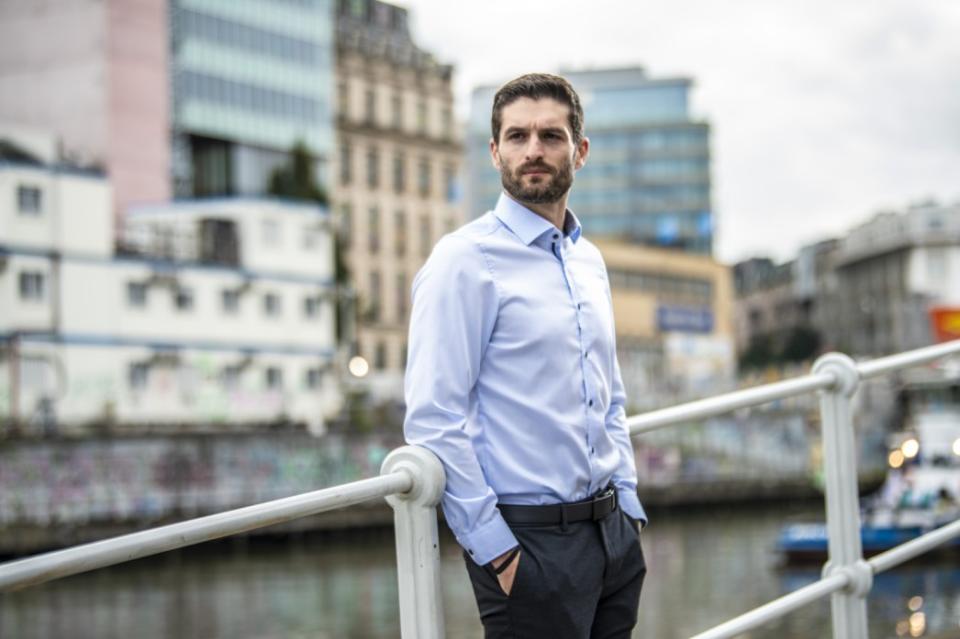
What does this mean for investors? “It’s obviously a trend to keep an eye on, but since it’s still a niche market, there are risks involved,” says Jonas.
“A first category comprises companies that place EaaS or a related service model at the heart of their activities, like EnergyVision, Sunrun or Ameresco.
A second category comprises the enablers, such as Schneider Electric or Honeywell. They supply energy management software, automation and infrastructure, among other things.
Finally, we have suppliers like Prysmian or Legrand, who supply cables, electrical components and supporting systems.”
(The companies mentioned are for illustrative purposes only and do not constitute an investment recommendation.)
Our thematic approach focuses on pioneers as well as companies capable of growing as solutions gain wider adoption.
Jonas Theyssens, Portfolio Manager at KBC Asset Management
To benefit from this trend, Jonas recommends taking a broad approach and considering the energy transition as a whole. He believes this theme is still underestimated. “Solar and wind energy are competitive energy sources nearly everywhere in the world. That creates opportunities, but the energy transition requires a lot more than solar panels and wind turbines alone; the electricity grid also needs serious expansion, and smart energy storage is becoming increasingly important. In other words, EaaS is only one small part of the solution. At KBC Asset Management, we actively track these trends early on.”
This broad perspective also aligns with KBC Asset Management’s thematic approach, which focuses on structural changes that shape the economy and society over the long term. Within these megatrends, the manager focuses on pioneers as well as companies capable of growing as solutions gain wider adoption.
“So we don’t always wait until a development has made a full breakthrough,” says Jonas. “We also investigate trends in their early stages and, where appropriate based on analysis, valuation and risk-return ratio, include them in our investment universe. Diversification remains key.”
Want to learn more about thematic investing?
The information contained in this publication is for information purposes only and should not be considered as investment advice.