
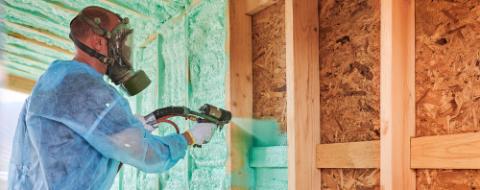
PUR, PIR or EPS? How to distinguish between insulation types
If you’re planning to insulate your home, you’ll soon come across terms like PUR, PIR and EPS. Each type of insulation has unique properties and advantages, but which option suits your project best? A little background knowledge can better prepare you to talk to your contractor, allowing you to make a decision that suits your home and needs.
What do PUR, PIR and EPS actually mean?
- PUR (polyurethane): widely used for floors and cavity walls. Good insulation value, affordable and widely applicable.
- PIR (polyisocyanurate): similar to PUR, but it insulates more effectively and is more fire-resistant. Ideal for flat roofs and circumstances where extra insulation is needed.
- EPS (expanded polystyrene): lightweight, moisture-resistant and cost-effective. Especially suitable for floors and facades, but you need a thicker layer to get the same insulation value as PUR or PIR.
Performance and environmental impact: what do you choose?
The ecological impact is an important factor for many people renovating their home. The impact of these materials mainly stems from their production: PUR and PIR are made from petroleum and chemical processes, which has a higher environmental impact, while EPS scores slightly better in terms of production, but is less efficient, so you use more material. You can read more about it in this article.
The relationship between price and quality also plays a big role. PIR is the most efficient per centimetre, but also the most expensive. PUR is a solid middle ground: affordable and widely applicable. EPS is the cheapest, but requires a thicker layer for the same energy efficiency.
Look carefully at which material suits your home
The insulation you choose ultimately depends on the specific requirements of your home and your own priorities. By comparing your options and asking for specific advice, you’ll make a choice that suits your renovation plans and vision for the future.