


Even Trump can't prevent alternative energy shares from rallying strongly
Alternative energy share prices have surged ahead again in recent months. While politicians around the world waver, behind the scenes the energy transition is accelerating. Artificial intelligence (AI), geopolitical tensions and a new wave of innovation are creating unprecedented momentum. But what does this mean for you as an investor? Is it time to start investing? Or are there still pitfalls lurking?
It’s fascinating to see how quickly the sector is recovering. Six months ago, it seemed as if the momentum was fading, but we are now seeing an unprecedented resurgence. It’s not just a rebound, but a strong signal.
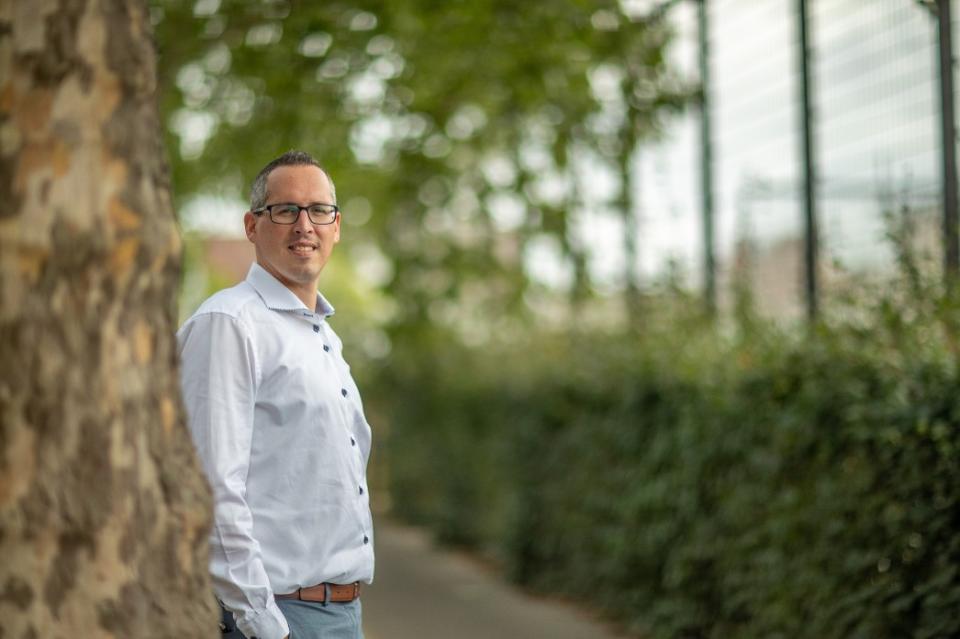
Anthony Sandra, Portfolio Manager at KBC Asset Management
An industry in flux
After dipping sharply, shares of renewable energy companies are performing remarkably well again. Several renewable energy indices have seen a strong recovery since February 2025, despite political uncertainty and delayed climate ambitions.
What explains this upturn? According to Anthony Sandra, Portfolio Manager at KBC Asset Management, the Alternative Energy sector is initially benefiting from falling interest rates, stabilising construction costs and growing demand for energy. ‘But there is much more to it to than that’, says Sandra. ‘We are seeing a cocktail of technological innovation, geopolitical shifts and the rise of AI.’
Trump: simultaneous brake and accelerator

And then there is the impact of Trump. His return to the White House is causing turmoil in the energy market worldwide. ‘Trump is betting all his chips on oil, gas and coal, scrapping subsidies for clean energy and withdrawing the US from the Paris Agreement,’ explains Sandra. ‘This is delaying major wind and solar energy investment projects in the US, increasing import tariffs on Chinese solar panels and leading to stricter approval procedures for new projects. It is also increasing the uncertainty for international players. Orsted and Equinor experienced this first-hand when their offshore construction of their wind projects were temporarily halted. Nevertheless, some US states and companies continue to invest in green energy, driven by economic logic. In fact, during Trump's last term, solar power production in Texas actually grew explosively.’
Trump also wants to lift greenhouse gas reporting requirements. Yet the reality is that the ground that companies continue to monitor their emissions and aim to become climate-neutral. By doing this, they are seeking to show their stakeholders that climate is still high on the agenda.
However, the picture is not clear-cut. ‘Ironically, Trump's policies have also caused an acceleration in efforts to combat climate change,’ Sandra notes.
‘On the one hand, his 'One Big Beautiful Bill' has provided clarity on the direction of travel of renewable energy tax credits. This removes a lot of uncertainty and allows companies to make an informed decision on whether or not to launch their project. Many developers who want to take advantage of the credits are trying to put the first spade in the ground as soon as possible."
‘On the other hand, energy needs in the US are high,’ Sandra adds. ‘Alternative energy is currently the fastest way to create new capacity. By contrast, building new gas and nuclear power plants can easily take three to five years.’
Energy as a source of power
So the energy transition is also taking place against a background of strategic (in)dependence and geopolitical tensions. ‘the war in Ukraine, dependence on LNG from the US and Russian gas and the rise of China as a technology leader and producer of solar panels and batteries have also given Europe a wake-up call,’ Sandra adds. ‘We are suddenly aware of our vulnerability. The quest for energy independence is accelerating. Local production, smart networks and cooperation within Europe are becoming increasingly important. We are also seeing this in Belgium, where construction of wind farms on the coast and hydrogen projects in Zeebrugge is in full swing.’
Falling gas and electricity prices reduce the sense of urgency to invest in alternative energy. However, companies may see this as a kind of insurance premium: invest now to reap the benefits later when electricity prices are higher again.
Anthony Sandra, Portfolio Manager at KBC Asset Management
‘Gas prices - after peaking in the winter months of 2025 - have fallen back again, resulting in a drop in electricity prices. As a result, the sense of urgency seems to have dissipated somewhat. However, companies that take advantage of the current low prices to invest in new solar installations can reduce their energy dependence,’ Sandra believes. ‘That’s actually a key driver of the current investment dynamic in large solar projects. The payback period is longer than, say, three years ago, but you can think of it as an insurance premium: invest now to reap the benefits later when electricity prices are higher again.’
AI and digitalisation as drivers of energy demand

AI is a real game-changer. It is radically changing the energy market and can lead to a significant acceleration of the energy transition. Companies that capitalise on digitalisation and energy management using AI therefore often have an edge.
‘Digitalisation and the data available from energy systems have increased tremendously. Data centres, which run AI models, are growing and gobbling up more and more power and cooling water. Their electricity and water consumption is expected to more than double by 2030,’ Sandra muses. ‘Half of this growth will be met by renewable energy, as solar and wind power can be scaled up more quickly than fossil or nuclear power. Companies are developing AI tools to maximise the efficiency of solar panels and batteries. That is pure innovation and it attracts investors.’
AI tools are used for efficiency and maintenance. Digital twins and machine learning enable more efficient maintenance of wind and solar farms. In addition, AI can predict energy yields, helping to better align renewable energy production and consumption with demand, reducing the risk of overproduction and negative pricing. ‘Not to mention the heat recovery that AI can achieve,’ Sandra continues enthusiastically. ‘Thanks to liquid cooling in data centres, residual heat can be reused by channelling it through smart heat grids to heat other buildings in the area, linking digital progress to societal added value.’
Innovation as a driver of the domestic economy
Alternative energy has long since moved beyond wind turbines and solar panels. The sector is taking shape in numerous projects worldwide. Belgium is also playing its part in this international energy dynamic.
When it comes to hydrogen, our country is a pioneer. The Hyoffwind project in Zeebrugge is building Belgium's first major green hydrogen power plant, produced using power from solar panels and wind turbines, and set to be operational from 2026. ‘Hydrogen is the missing link in the energy transition,’ asserts Sandra. ‘It makes it possible to store and use green power when the sun is not shining or the wind is not blowing.’
Heat networks and waste heat projects are gaining in importance. In Antwerp, industrial waste heat is routed to homes and businesses via smart networks. ‘It’s a textbook example of the circular economy,’ says Sandra. ‘We make the best use of what we already have.’
‘Tidal energy has also been receiving attention for some time as a promising source of renewable energy. It converts the power of tidal ebb and flow into clean power directly from the movement of our oceans. The first pilot projects are starting to yield results. Who knows, maybe the sea will bring a new wave of renewable energy in the future.’
Alternative energy is back in demand, but requires a level head
The energy transition is not hype, but an unstoppable trend. Those who invest now will be contributing to a more sustainable future and stand to benefit from the further recovery potential of the sector.
Anthony Sandra, Portfolio Manager at KBC Asset Management

Alternative energy is once again in demand among investors. ‘The energy transition is a megatrend, supported by policy, innovation and societal pressure,’ says Sandra. ‘Those who invest in this sustainable trend stand to benefit from the recovery potential as well as contributing to a cleaner future. Investing in alternative energy is a form of diversification and can protect against volatility in fossil fuel markets.’
But Sandra also warns: ‘Keeping a level head is still essential. It’s a very volatile sector, which is sensitive to policy changes, technological risks and international developments. Cheap imports from China, for example, are putting pressure on European manufacturers of solar panels and wind turbines. New technologies are promising, but not always immediately profitable. And many projects depend on government support and regulations. Changes in those areas can affect profitability.’
Sandra realises that understanding this complex market can be challenging for investors. ‘Investors who want to take away the worry of investing in alternative energy can entrust the management of their investments to professional experts by investing in specific, relevant funds. These funds are actively and expertly managed, with a focus on diversification, risk management and the latest market developments. This ensures that investors are able to respond optimally to the opportunities presented by the energy transition, without losing themselves in the complexity of the sector,’ Sandra explains, reflecting his own professional experience.
Want to learn more about responsible investing?
The information contained in this publication is for information purposes only and should not be considered as investment advice.