
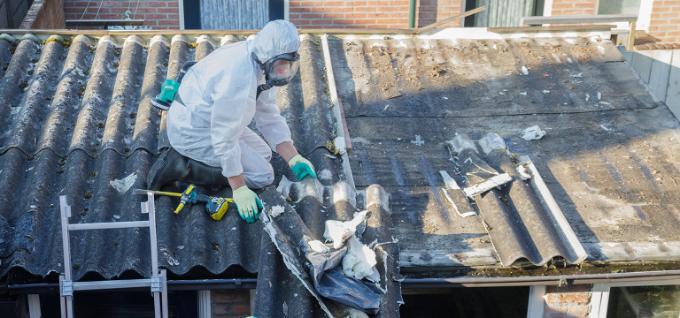
Where might there be asbestos in your home?
Asbestos was used in building materials for many years. It was popular because it was cheap, strong and resistant to fire. But we now know that asbestos is hazardous to your health. Asbestos has been banned since 1998, yet it can still often be found in homes built before 2001. If your property dates from that period or earlier, it might contain asbestos. Read on to find out how to recognise asbestos, where you’ll often find it and how to remove it.
How to recognise asbestos
Asbestos is not always immediately recognisable, but there are some typical characteristics. It often has a grey-white, fibrous texture and also feels a bit like cement. In corrugated sheets, you will usually see a wavy pattern.
There are also differences between asbestos cement and materials in which the asbestos fibres are bound together more loosely. The second is the most dangerous form, as the fibres are released more readily.
Not sure? Only a laboratory analysis can provide certainty. So always have the material examined by a certified asbestos expert.
Asbestos can be found in a surprisingly large number of places
- Roof and exterior walls: corrugated sheets, slate roof tiles, gutters and cladding panels
- Interior walls and ceilings: wall boards, spray cork, asbestos-containing wallpaper and ceiling tiles
- Floors: vinyl tiles, lino and asbestos-based adhesives
- Pipes and heating: insulation around pipes, sealing straps and chimney insulation
- Electrical installations: old fuse boxes, switchgear and insulation
- Outdoors and gardens: corrugated sheets on garden sheds, flower boxes, sewage pipes and rainwater cisterns
What to do if you suspect the presence of asbestos
If you see any material that looks suspicious, don't touch it. Removing it yourself is dangerous as fibres can be released and dispersed.
Always have a survey carried out by a certified asbestos expert. They will be able to determine if it really is asbestos and advise on how to have it removed safely.
Good to know: there are grants and subsidies available for asbestos removal. You will find all the details on the Public Waste Agency of Flanders website (OVAM).
Legislation and obligations
If you own a property that was built before 2001, there are clear rules.
- When selling the property: it has been compulsory since 2022 to have an asbestos certificate
- By 2032: every owner of a pre-2001 building must have this certificate
- The Flemish government’s goal: by 2040, all buildings must be free of asbestos
The certificate indicates where asbestos is located and how it can be safely removed. This way, you are not only complying with the law but also protecting yourself and others.
Asbestos is still commonly found in older homes
Recognising it and having it safely removed is therefore important for your health. With KBC Mobile, you can easily apply for your asbestos certificate from ‘De Immowinkel’. A reliable expert will visit you and inspect your entire home. You can then be sure if any asbestos is hidden away anywhere.